Center For Ocean Sciences Education Excellence COSEE Pacific Partnerships
Follow this link to skip to the main content
HOME ABOUT US PROGRAMS EVENTS CURRICULUM RESOURCES NEWS DIRECTORY CONTACT US
SEARCH RESOURCES
FILTER RESOURCES
  • Select a category:
  • Select a resource type:
  • Search resources:
  • Order by:
 
Strang, C., Decharon, A., & Schoedinger, S. (2007). Can you be science literate without being ocean literate? Current: The Journal of Marine Education, 23(1), 7-9.

The Ocean Literacy Campaign is changing the way educators and the public think about ocean sciences education: teaching ocean sciences is not just enrichment, but is essential to science literacy. Read about how the Ocean Literacy Campaign is bringing about a paradigm shift in the way educators and the public think about Ocean Sciences Education.   DOWNLOAD (854 KB) >>

Strang, C., Dorph, R., & Halversen, C. (2005). Communicating ocean sciences: a course that improves education & public outreach. Paper presented at the Marine Technology Society Conference.

Together educators and ocean scientists have developed and teach a university course entitled Communicating Ocean Sciences that is now being taught in several institutions of higher education nationwide. The course is designed for undergraduate and graduate science students interested in improving their ability to communicate about complex science concepts. This paper focuses on the content, outcomes, and potential of the Communicating Ocean Sciences course.

   DOWNLOAD (217 KB) >>

This guide provides basic information for scientists who wish to engage in education and public outreach (EPO). Engaging in EPO can be an excellent way to address funding agencies’ requirements that proponents articulate the broader societal value of their research.

In this guide, EPO refers broadly to efforts to increase awareness and understanding of science. Audiences targeted by EPO can include students, teachers, children, adults, and just about any conceivable subset of these (e.g., economically disadvantaged youth, adult education instructors, museum visitors, parents, newspaper readers, high school students). Whether you are preparing a proposal or looking for tips to implement EPO effectively, this guide can help you recognize and contribute to high-quality EPO.

Support for this project comes from the National Science Foundation’s Division of Ocean Science’s Centers for Ocean Sciences Education Excellence (COSEE) and from the authors’ respective institutions. Funding to publish the guide was provided to TOS through a grant from the National Science Foundation. Single copies of the guide are available by writing to info@tos.org.

   DOWNLOAD (1.97 MB) >>
The Northwest Center for Sustainable Resources (NCSR) is a national resource center for curriculum products supporting undergraduate natural resource disciplines. The Center is supported by the National Science Foundation’s Advanced Technological Education (ATE) program.

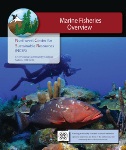
Recently NCSR has completed a comprehensive series of curriculum modules on Marine Fisheries. The Marine Fisheries Series consists of nine modules covering the background, current status, causes for decline, management approaches and anticipated future of this vital resource. The marine fisheries modules are most appropriate for inclusion in undergraduate courses such as Environmental Science, Introduction to Natural Resources, Marine Biology, Introduction to Fisheries and Fisheries Management. Parts of the modules also have application in courses with a broader scope such as General Ecology and General Biology and for informal science education audiences.

The Marine Fisheries modules as well as other curriculum products can be downloaded from or ordered in hardcopy and on CDs through the NCSR website.

Cover Photo: Visual fish survey in Dry Tortugas Ecological Reserve - Jiangang Luo/Marine Photobank

   LINK >>

Walker, S., Strang, C., & Cook, S., (2005). The centers for ocean sciences education excellence (COSEE): a national success story. Marine Technology Society Journal, winter 2005/2006.

An article that describes some of the COSEE Network goals and discusses how the Network has been successful in working toward those goals.

   DOWNLOAD (2.77 MB) >>
Resources per page: